| dc.contributor.advisor | Cendales Herrera, Camilo Arturo | |
| dc.coverage.spatial | cead_-_josé_celestino_mutis | spa |
| dc.creator | Fuentes Portela, María Isabel | |
| dc.date.accessioned | 2019-10-04T15:02:44Z | |
| dc.date.available | 2019-10-04T15:02:44Z | |
| dc.date.created | 2019-10-03 | |
| dc.identifier.uri | https://repository.unad.edu.co/handle/10596/27872 | |
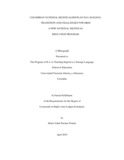
| dc.description | Colombian national bilingualism plan 2014-2018(2019): Transition and challenges towards a new national bilingual education program. | spa |
| dc.description.abstract | La presente monografía sugiere estrategias y pautas generales para superar los desafíos que deja el Plan Nacional de Bilingüismo, centrándose en los maestros como la herramienta más importante para que tenga éxito. Es importante porque, aunque los investigadores han evaluado el plan, ninguno de ellos se ha centrado en las necesidades de los docentes del sector privado como clave para alcanzar con éxito los objetivos del plan. Para mejorar la educación bilingüe, es importante comprender los desafíos actuales y cómo los roles de los docentes y el desarrollo profesional son pilares para lograr los objetivos esperados de este Plan. Mediante una investigación cualitativa (utilizando algunos datos cuantitativos), se analizaron los cuestionarios de población de muestra para comprender a los docentes del sector privado y su comprensión del Plan Nacional de Bilingüismo. Solo 1 de cada 10 maestros afirmó entender el plan, pero lo sabía parcialmente, sin embargo, los maestros que trabajan con proyectos dirigidos al Plan no reconocen que están trabajando en uno de esos proyectos. Después de analizar los datos, el investigador sugiere algunos aspectos a considerar para superar los desafíos del Plan Nacional de Bilingüismo, enfocándose en las necesidades de los maestros. | spa |
| dc.format | pdf | spa |
| dc.format.mimetype | application/pdf | spa |
| dc.language.iso | spa | spa |
| dc.publisher | Universidad Nacional Abierta y a Distancia UNAD | spa |
| dc.title | Colombian national bilingualism plan 2014-2018(2019): Transition and challenges towards a new national bilingual education program. | spa |
| dc.type | Monografía | spa |
| dc.subject.keywords | Private | spa |
| dc.subject.keywords | Public | spa |
| dc.subject.keywords | Schools | spa |
| dc.description.abstractenglish | The present monograph suggests general strategies and guidelines to overcome the challenges left by the National Bilingualism Plan focusing on the teachers as the most important tool for the it to be successful. It is important because even though researchers have assessed the plan, none of them has focused on private sector teacher’s necessities as a key to successfully reach the goals of the plan. In order to improve Bilingual education, it is important to understand the present challenges and how teacher’s roles and professional development are pillars to achieve this Plan’s expected goals. By means of a qualitative research (using some quantitative data) the sample population questionnaires were analyzed to comprehend private sector teachers and their understanding of the National Bilingualism Plan. Only 1 out of 10 teachers claimed to understand the plan, but partially knew about it, however teachers working with projects aimed at the Plan, do not recognize they are working on one of those projects. After analyzing the data, the researcher suggests some aspects to be considered to overcome the challenges of the National Bilingualism Plan focusing on teachers’ needs. | spa |
| dc.rights.accesRights | info:eu-repo/semantics/openAccess | spa |
| dc.rights.acceso | Abierto (Texto Completo) | spa |