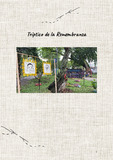
| dc.contributor.advisor | Esteban Sánchez | |
| dc.coverage.spatial | UNAD CEAD Palmira | |
| dc.creator | Niyireth Rodríguez García | |
| dc.date.accessioned | 2024-11-15T17:51:04Z | |
| dc.date.available | 2024-11-15T17:51:04Z | |
| dc.date.created | 2024 | |
| dc.identifier | https://munad.unad.edu.co/niyireth-rodriguez/ | |
| dc.identifier.uri | https://repository.unad.edu.co/handle/10596/64556 | |
| dc.description | Instalación artística | |
| dc.description.abstract | Tríptico de la Remembranza es una obra que explora cómo el arte puede convertirse en un medio de memoria, resistencia y sanación frente a la violencia policial en Colombia. Inspirada en las ideas de Walter Benjamin sobre la memoria y la imagen dialéctica, esta obra rinde homenaje a Natalia Andrea y Brayan Perlaza Rueda, dos jóvenes cuyas vidas fueron truncadas injustamente por el accionar de las fuerzas de seguridad en Palmira. Más que una creación artística, esta obra busca dar un espacio tangible a la memoria de quienes ya no están y visibilizar las historias que suelen ser silenciadas.
La pieza se compone de dos retratos bordados, sostenidos por una pinza de cabello de Emilse Rueda, la madre de las víctimas y acompañados de una vasija de agua. Cada hilo y puntada en estos retratos simbolizan el acto de recordar, una memoria que resiste y persiste. El agua, como elemento simbólico, evoca el flujo de la vida y honra una tradición latinoamericana de duelo. A través del bordado, la obra enlaza las historias individuales de Natalia y Brayan con una memoria colectiva que invita a reflexionar sobre la fragilidad y la dignidad de la vida.
La obra se inspira en la noción de imagen dialéctica de Benjamin, que nos invita a ver el pasado y el presente como una serie de imágenes que dialogan entre sí. Los elementos simbólicos —como los hilos sueltos y los nudos finales— nos llevan a pensar en la memoria como algo frágil pero resistente. Estos hilos no solo representan una historia personal, sino también un archivo colectivo que desafía el olvido y actúa como un llamado a la justicia. Así, Tríptico de la Remembranza se convierte en un espacio de sanación, donde el arte ofrece un respiro para el duelo y una fuerza para la resistencia. | |
| dc.format | PDF | |
| dc.title | Tríptico de la Remembranza | |
| dc.type | Creación de obra artística | |
| dc.subject.keywords | Memoria colectiva||Resistencia||Justicia||Duelo||Arte textil | |
| dc.description.abstractenglish | The Triptych of Remembrance project is a work that explores how art can become a means of memory, resistance and healing in the face of police violence in Colombia. Inspired by Walter Benjamin's ideas about memory and the dialectical image, this work pays tribute to Natalia and Brayan Perlaza, two young people whose lives were unjustly cut short by the actions of the security forces in Palmira. More than an artistic creation, this work seeks to give a tangible space to the memory of those who are no longer here and make visible the stories that are usually silenced.
The piece is made up of two embroidered portraits, held by a hair clip of the victims' mother and accompanied by a vessel of water. Each thread and stitch in these portraits symbolize the act of remembering, a memory that resists and persists. Water, as a symbolic element, evokes the flow of life and honors a Latin American tradition of mourning. Through embroidery, the work links the individual stories of Natalia and Brayan with a collective memory that invites us to reflect on the fragility and dignity of life.
The work is inspired by Benjamin's notion of the dialectical image, which invites us to see the past and present as a series of images that dialogue with each other. Symbolic elements—such as loose threads and final knots— lead us to think of memory as something fragile but resistant. These threads not only represent a personal story, but also a collective archive that challenges oblivion and acts as a call for justice. Thus, Triptych of Remembrance becomes a space for healing, where art offers a respite for grief and a strength for resistance. | |
| dc.subject.category | Instalación||bordado||tejido | |