| dc.contributor.advisor | Salazar Escobar, Nelson Alejandro | |
| dc.coverage.spatial | Zona Centro Bogotá - ZCBC- Jose Acevedo y Gomez | |
| dc.creator | Orjuela Penagos, Javier Alejandro | |
| dc.date.accessioned | 2025-06-13T20:16:35Z | |
| dc.date.available | 2025-06-13T20:16:35Z | |
| dc.date.created | 2024 | |
| dc.identifier | https://munad.unad.edu.co/javier-alejandro-orjuela-penagos/ | |
| dc.identifier.uri | https://repository.unad.edu.co/handle/10596/69969 | |
| dc.description.abstract | Los objetos son tan silenciosos como elocuentes; habitan nuestro entorno, llenos de historias, significados y afectos. No son simplemente cosas: son extensiones materiales de quienes los crearon y usaron, huellas innegables de la vida, el tiempo y el territorio. Cuando hablamos de la memoria cultural de una región, los objetos se convierten en verdaderos archivos vivos, capaces de preservar y transmitir saberes, identidades y prácticas colectivas.
En este sentido, hay dos objetos que se convierten en elementos centrales de la historia de nuestro país. A través de ellos es posible reconstruir formas de vida, prácticas económicas y culturales, pero también son, en muchos casos, herramientas que simbolizan la resistencia. Su materialidad encarna lo inmaterial; su forma concreta habla de procesos simbólicos profundos. Así, cuando buscamos nuestra identidad en los objetos, los machetes y azadones surgen como elementos que nos ayudan a la conservación y valorización de nuestra historia.
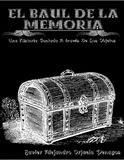
El baúl de la memoria busca no solo conservar los objetos como vestigios del pasado, sino activarlos como generadores de sentido en el presente. Y en ese proceso, vincular prácticas artísticas contemporáneas como el grabado expandido y el libro de artista como una forma de preinscribir la memoria en el tiempo, de transformar lo heredado en creación viva, de hacer que las historias y los relatos hablen de nuevo. Porque cuando un objeto se graba, no solo se imprime una imagen: se imprime también una historia, una emoción, una memoria que, al multiplicarse, se vuelve colectiva. | |
| dc.format | PDF | |
| dc.title | El Baul de la Memoria. Entre machetes y azadones: los objetos como guardianes de la memoria cultural y su resignificación a través del grabado. | |
| dc.type | Creación obra de artística | |
| dc.subject.keywords | Memoria, cultura, historia, objeto, grabado, libro arte, nostalgia | |
| dc.description.abstractenglish | Objects are as silent as they are eloquent, inhabiting our surroundings, full of stories, meanings, and affections. They are not simply things: they are material extensions of those who created and used them, undeniable traces of life, time, and territory. When we talk about the cultural memory of a region, objects become true living archives, capable of preserving and transmitting knowledge, identities, and collective practices. From a clay pot to an agricultural tool, each object contains within itself a web of social relations, worldviews, forms of resistance, and symbolic expressions that make up the historical, political, and cultural heritage of the communities. In this sense, these two objects become central elements of our country's history. Through them, it is possible to reconstruct ways of life, economic practices, belief systems that link objects to the territory, but they are also, in many cases, tools that symbolize resistance: when everything else has been lost, these two objects persist, resist, and remember. Their materiality embodies the immaterial; their concrete form speaks of deep symbolic processes. Thus, the conservation and valorization of these objects so traditional in our culture should not be understood as a merely nostalgic exercise, but as a political and cultural practice of recognition, dignification, and preservation of our memories.
The trunk of memory seeks not only to preserve objects as vestiges of the past but to activate them as generators of meaning in the present. And in that process, linking contemporary artistic practices such as expanded printmaking and the artist's book as a way to pre-inscribe memory in time, to transform the inherited into living creation, to make stories and narratives speak again. Because when an object is printed, not only is an image imprinted: a story, an emotion, a memory is also imprinted, which, when multiplied, becomes collective. | |
| dc.subject.category | Grafica y Pintura | |