| dc.contributor.advisor | Ortega Mercado, Floralba | |
| dc.coverage.spatial | cead_-_ibagué | |
| dc.creator | Rivera Gómez, Mario Alberto | |
| dc.creator | Ortega Gómez, Carlos Hugo | |
| dc.creator | Rievera Ortiz, Leidy | |
| dc.creator | Gaivis Duque, Nelson Ricardo | |
| dc.creator | Rodriguez Castiblanco, David Esteban | |
| dc.date.accessioned | 2023-09-14T15:04:23Z | |
| dc.date.available | 2023-09-14T15:04:23Z | |
| dc.date.created | 2023-08-18 | |
| dc.identifier.uri | https://repository.unad.edu.co/handle/10596/57708 | |
| dc.description | No aplica | |
| dc.description.abstract | La violencia y el conflicto armado han marcado a Colombia; se considera que es de origen sociopolítico-económico, que proviene de una lucha de diferentes actores a partir de la “desigualdad” e
intereses de dominio y poder; conllevando a la alteración de la vida cotidiana y dejando al pueblo
Colombiano en medio de esta guerra absurda y la cual está afectando a las personas sin importar:
etnia, sexo, edad u origen. La narrativa de la violencia entrelaza las diversas formas de entender
lo sucedido mediante una reflexión de la lógica binaria de víctimas y victimarios. En este trabajo
abordaremos la temática por medio de los siguientes apartados: se inicia con el análisis de relatos
de historias; entre ellas, se hace referencia a la violencia que sufrió la comunidad indígena Barí y
su lucha por la defensa de su territorio, quiénes fueron violentados y desterrados de sus
territorios ancestrales, se hace un reconocimiento de los emergentes psicosociales, se muestra el
papel de la víctima con sus flagelos, los desafíos y la resiliencia a la superación y se concluye la
historia de los Barí con la formulación de preguntas enfocadas a profundizar en la historia para
descubrir si la víctima ha dado ese paso sujeto-emergente de la violencia vivida. Otro relato es la
masacre en El Salado; población que fue afectada por un grupo armado ilegal cometiendo actos
violentos, dejando huellas de dolor Bio-Psico-Sociocultural, se muestra cómo la comunidad se
transformó siendo resilientes, se propone tres estrategias que los potencializan hacia el
afrontamiento. El segundo apartado es la experiencia obtenida con el ejercicio de foto-voz y su
narrativa realizada en el Paso 3 del diplomado, se aborda las imágenes y la narrativa como forma
de comunicación, confrontando realidades y reflexionando sobre nuestro contexto | |
| dc.format | pdf | |
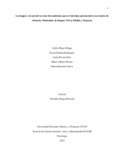
| dc.title | La imagen y la narrativa como herramientas para el abordaje psicosocial en escenarios de violencia. Municipios de Ibagué, Neiva, Pitalito y Popayán. | |
| dc.type | Diplomado de profundización para grado | |
| dc.subject.keywords | Violencia | |
| dc.subject.keywords | Narrativa | |
| dc.subject.keywords | Psicosocial | |
| dc.subject.keywords | Afrontamiento | |
| dc.subject.keywords | Victima | |
| dc.description.abstractenglish | Violence and armed conflict have marked Colombia; it is considered to be of socio-politicaleconomic origin, which comes from a struggle of different actors based on "inequality" and
interests of dominance and power; leading to the alteration of daily life and leaving the
Colombian people in the midst of this absurd war and which is affecting people regardless of:
ethnicity, sex, age or origin. The narrative of violence intertwines the different ways of
understanding what happened through a reflection of the binary logic of victims and perpetrators.
In this work we will approach the theme through the following sections: it begins with the
analysis of stories; Among them, reference is made to the violence suffered by the Barí
indigenous community and their fight for the defense of their territory, who were violated and
exiled from their ancestral territories, recognition of the psychosocial emergents is made, the role
of the victim with its scourges, challenges and resilience to overcome and the story of the Barí
concludes with the formulation of questions focused on delving into the story to discover if the
victim has taken that step-emerging subject of the violence experienced. Another story is the
massacre in El Salado; population that was affected by an illegal armed group committing
violent acts, leaving traces of Bio-Psycho-Sociocultural pain, it shows how the community was
transformed by being resilient, three strategies are proposed that empower them towards coping.
The second section is the experience obtained with the photo-voice exercise and its narrative
carried out in Step 3 of the diploma, images and narrative are addressed as a form of
communication, confronting realities and reflecting on our context. | |
| dc.subject.category | Psicología | |