| dc.contributor.advisor | Mayorga Ortegón, Angela Ivethe | |
| dc.coverage.spatial | cead_-_ibagué | |
| dc.creator | Sánchez Montoya, Carlos Andrés | |
| dc.date.accessioned | 2020-10-23T21:28:09Z | |
| dc.date.available | 2020-10-23T21:28:09Z | |
| dc.date.created | 2019-12-14 | |
| dc.identifier.uri | https://repository.unad.edu.co/handle/10596/37230 | |
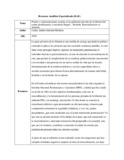
| dc.description.abstract | La pena privativa de la libertad es una medida de castigo que desde la política criminal se aplica a las personas que han cometido conductas punibles, la cual tiene como principal objetivo, ejecutar un tratamiento penitenciario al individuo durante su prisionalización, en aras de alcanzar la resocialización de este, que permita al cumplimiento de su condena, poder reinsertar nuevamente a la sociedad a una persona con un nuevo sentido de vida que ha tomado distanciamiento de la conducta delictiva y con las capacidades éticas y morales necesarias para desenvolverse adecuadamente de manera individual, familiar y social dentro de su entorno.
En el Estado colombiano esta misión resocializadora le ha sido asignada al Instituto Nacional Penitenciario y Carcelario INPEC, entidad que fue creada en el año de 1992 con dos objetivos fundamentales, cual son; la resocialización y la humanización de las personas privadas de la libertad (en adelante PPL), sin embargo, trascurridos 28 años desde su creación la reincidencia delictiva sigue presentando un alto porcentaje, situación que compromete seriamente la seguridad ciudadana, y a su vez, genera preguntarnos ¿qué está sucediendo con el actual tratamiento penitenciario? Ya que este no permite alcanzar el fin último de la pena, que está enmarcado en la resocialización y adecuada reinserción del postpenado a la sociedad, sino que, por el contrario, contribuye a aumentar el estado de anomia que actualmente presenta todos los entornos sociales.
A pesar de que al referente se han realizado varias investigaciones que han arrojado resultados negativos respecto al tema de resocialización, son muy pocos los estudios que se han preocupado seriamente por identificar el contenido de las representaciones sociales que a partir de la vida en prisión construyen las PPL, que permitan establecer una relación entre este pensamiento colectivo de la población carcelaria y los escasos resultados que se obtienen al aplicar el tratamiento penitenciario, por este motivo, fue interés de esta labor investigativa, identificar de qué manera las representaciones sociales de las PPL en el Centro Penitenciario y Carcelario Ibagué - Picaleña obstaculiza los diferentes programas de reinserción social que se implementan en cumplimiento del Tratamiento Penitenciario que se ejecuta en este establecimiento carcelario. | |
| dc.format | pdf | |
| dc.title | Prisión y Representaciones Sociales en la población privada de la libertad del Centro Penitenciario y Carcelario Ibagué – Picaleña Resocialización vs Anomia | |
| dc.type | Proyecto de investigación | |
| dc.subject.keywords | Derechos, Estrategias de intervención, Reinserción social, Representaciones sociales | |
| dc.description.abstractenglish | The custodial sentence is a measure of punishment that is applied by criminal policy to people who have committed punishable behaviors, which has as its main objective, to carry out a prison treatment for the individual during their imprisonment, in order to achieve re-socialization of this, which allows the fulfillment of his sentence, to be able to reintegrate into society a person with a new sense of life who has distanced himself from criminal behavior and with the necessary ethical and moral capacities to function adequately individually, family and social within their environment.
In the Colombian State, this resocializing mission has been assigned to the National Penitentiary and Prison Institute INPEC, an entity that was created in 1992 with two fundamental objectives, which are; the resocialization and humanization of people deprived of liberty (hereinafter PPL), however, 28 years after its creation, criminal recidivism continues to present a high percentage, a situation that seriously compromises citizen security, and in turn, generates questions What is happening with the current prison treatment? Since this does not allow to achieve the ultimate goal of the penalty, which is framed in the re-socialization and adequate reintegration of the post-prisoner into society, but, on the contrary, it contributes to increasing the state of anomie that currently presents all social environments.
Despite the fact that several investigations have been carried out regarding the referent that have yielded negative results regarding the issue of resocialization, very few studies have been seriously concerned with identifying the content of the social representations that, from life in prison, construct the PPL, which allow establishing a relationship between this collective thinking of the prison population and the scarce results obtained when applying prison treatment, for this reason, it was the interest of this investigative work, to identify how the social representations of the PPL in The Ibagué - Picaleña Penitentiary and Prison Center obstructs the different social reintegration programs that are implemented in compliance with the Penitentiary Treatment that is executed in this prison establishment. | |
| dc.subject.category | Psicologia | |