| dc.contributor.advisor | Martínez Medina, Lucas | |
| dc.coverage.spatial | cead_-_acacias | spa |
| dc.creator | López Mantilla, Jairo | |
| dc.date.accessioned | 2020-04-13T01:07:00Z | |
| dc.date.available | 2020-04-13T01:07:00Z | |
| dc.date.created | 2019-12-02 | |
| dc.identifier.uri | https://repository.unad.edu.co/handle/10596/33268 | |
| dc.description.abstract | El presente trabajo se hará con el fin de conocer y saber sobre las voces de los indígenas respecto a la educación que reciben sus niños y niñas del resguardo indígena WACOYO. Su principal problema ha sido siempre de alto porcentaje de analfabetismo, la ausencia de formación profesional, la dificultad de acceso por la distancia y la falta de infraestructura. La razón anterior se llevará a conocer de ¿cómo surgió el sentido de la ETNOEDUCACION en las comunidades indígenas? fue una historia larga, producto de una lucha ligada al ambiente, al proceso productivo, al proceso social y cultural. | spa |
| dc.format | pdf | |
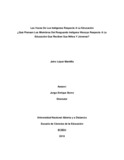
| dc.title | Las voces De Los Indígenas respecto a la educación ¿Qué piensan los miembros del resguardo Indígena Wacoyo respecto a la educación que reciben sus niños y jóvenes? | |
| dc.type | Monografía | |
| dc.subject.keywords | Niño, Educación, Comunidad, Indio, Cultura | spa |
| dc.description.abstractenglish | The present work will be done in order to know and know about the voices of the indigenous people regarding the education that their children receive from the WACOYO indigenous shelter. Its main problem has always been a high percentage of illiteracy, the absence of professional training, the difficulty of access due to distance and the lack of infrastructure. The above reason will be known as how the meaning of ETNOEDUCATION in indigenous communities arose? It was a long story, the product of a struggle linked to the environment, the productive process, the social and cultural process. | spa |
| dc.subject.category | Licenciatura en Etnoeducación | spa |